Check the physical fit
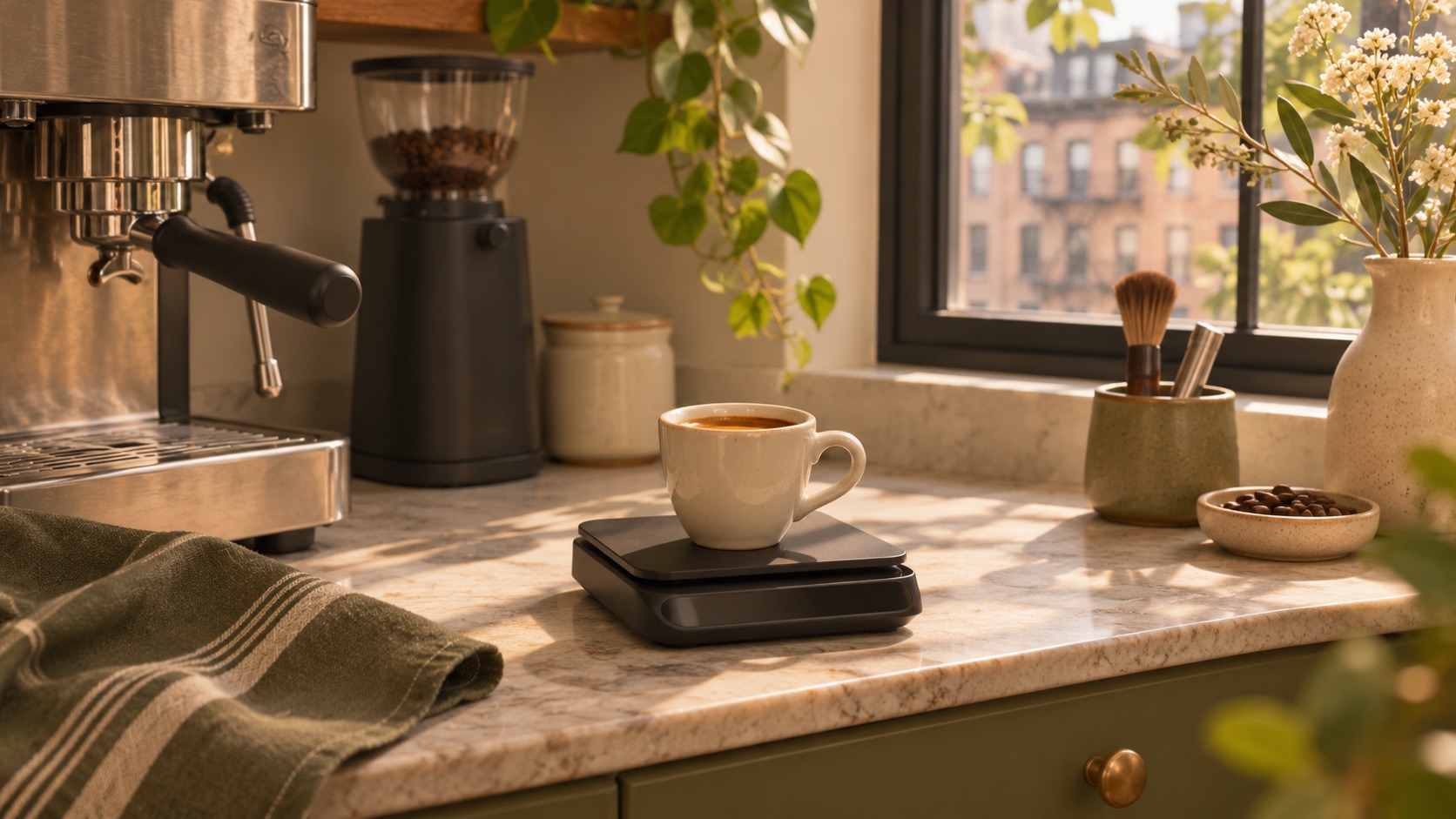
Measure the drip tray and the distance from the tray to the spouts with your usual cup in place. Include the height of the scale. Some scales designed for pour-over are too large for a compact espresso tray.
Understand readability
A display that shows 0.1 g provides finer increments than one that displays whole grams. Readability does not establish real-world accuracy. Check the manufacturer’s specifications, minimum weight and maximum capacity, especially for very small doses.
Timer and water protection
A built-in timer can simplify tracking a shot; a separate timer also works. Look closely at how the product describes water resistance and cleaning. Espresso spills happen, but water resistance is not permission to submerge a scale.
Keep it practical
Confirm battery or charging needs, display visibility under your cup and whether automatic modes suit your workflow. A kitchen scale you already own may be enough to start if it measures your dose reliably and fits.
Three scales to measure against your setup
The measurements below come from the linked makers and describe the scale body, not the clearance a cup needs. Check the exact version and leave room around your equipment. These products have not been hands-on tested.
| Model | Maker’s dimensions | What to check |
|---|---|---|
| Maestri House S1 Air | 3.74 × 3.93 × 0.63 in | Automatic espresso timing; maker specifications |
| Maestri House S2 | 4.13 × 4.13 × 0.78 in | Glass surface and timer; maker specifications |
| Wacaco Exagram Pro | 90 × 95 × 22 mm | 0.3 g minimum, 2 kg maximum; maker specifications |
Measure the width and depth of your tray and the height from its surface to the spouts. Then include your cup height, the scale height and enough room to insert and remove the cup.
Ready to compare equipment?
Explore scales ↗