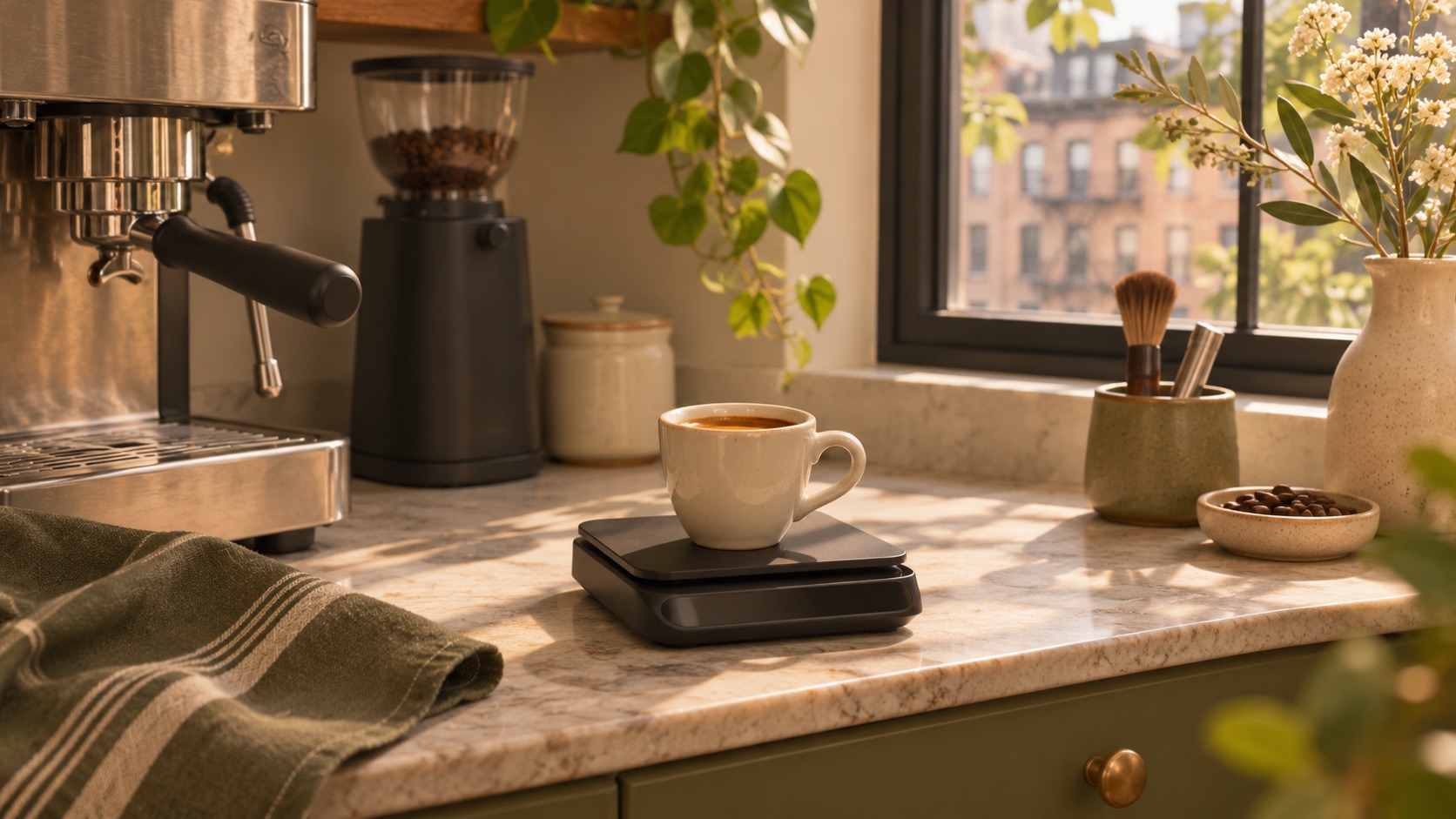
Measure the working area
Measure width, depth and the clearance below the cabinets. Include the power cord, the drip tray, and the space your hand needs to turn the portafilter. A machine that technically fits can still be frustrating if the tank can only be lifted from the top.
Read dimensions in the right order
A maker may list width, depth and height in a different order from a retailer. Find the labels, not just the three numbers. Compare the exact model and variant, and check whether any handles, protrusions or accessories are included. The examples below link to the maker’s measurements so you can verify them.
Map the workflow
Put a cup, grinder and imaginary knock box on the counter. Can you transfer coffee without crossing the sink? Where will a wet pitcher go? Try the layout with cardboard before buying. Leave a clear route to refill the water tank and remove the drip tray.
Check height and access
Measure up to the underside of the cabinet, then consider the space needed to open lids, fill or remove the water tank and clean the machine. The calculator below does not calculate height or clearance. Follow the maker’s instructions and leave room for cords, ventilation and the movements your routine requires.
Account for the whole setup
A separate grinder, milk pitcher, scale and cleaning supplies can need their own working areas. A grinder can be deeper or taller than the machine, so adding only its width will not prove the setup fits. Measure each item and test whether the arrangement still leaves usable preparation space.
Separate essentials from nice-to-haves
A first setup can begin with a machine, suitable coffee, a cup and a way to measure a repeatable dose. A separate grinder matters when you buy whole beans; an all-in-one machine changes that calculation. Accessories such as distribution needles or a dedicated knock box can wait until you know your routine.
Check before buying
Look up the exact model’s dimensions, voltage and maintenance clearance in its manual. Dimensions, stock and included accessories can vary by version and seller. Compare the complete arrangement rather than declaring the narrowest machine the best fit.
Will the numbers fit?
Enter the space you have and the measurements of the equipment you are considering. This checks width and depth only, in inches.
Start with a manufacturer's dimensions
Body measurements in inches, listed as width × depth × height. Verified against the linked manufacturer pages on November 12, 2026. Confirm the exact model and variant before buying. Dimensions are not a required working clearance.
| Machine | W × D × H (in) | Source | Calculator |
|---|---|---|---|
| Nespresso Essenza Mini by Breville | 3.3 × 13 × 8 | Breville ↗ | |
| Gaggia Classic Pro E24 | 8 × 9.5 × 14.2 | Gaggia ↗ | |
| Rancilio Silvia | 9.3 × 11.4 × 13.4 | Rancilio ↗ | |
| Rancilio Silvia Pro X | 9.8 × 16.5 × 15.3 | Rancilio ↗ |
Height is shown for reference but is not checked by this calculator. You can also enter measurements for another machine yourself.
Ready to compare equipment?
Explore machines ↗