Start with a reasonable dose
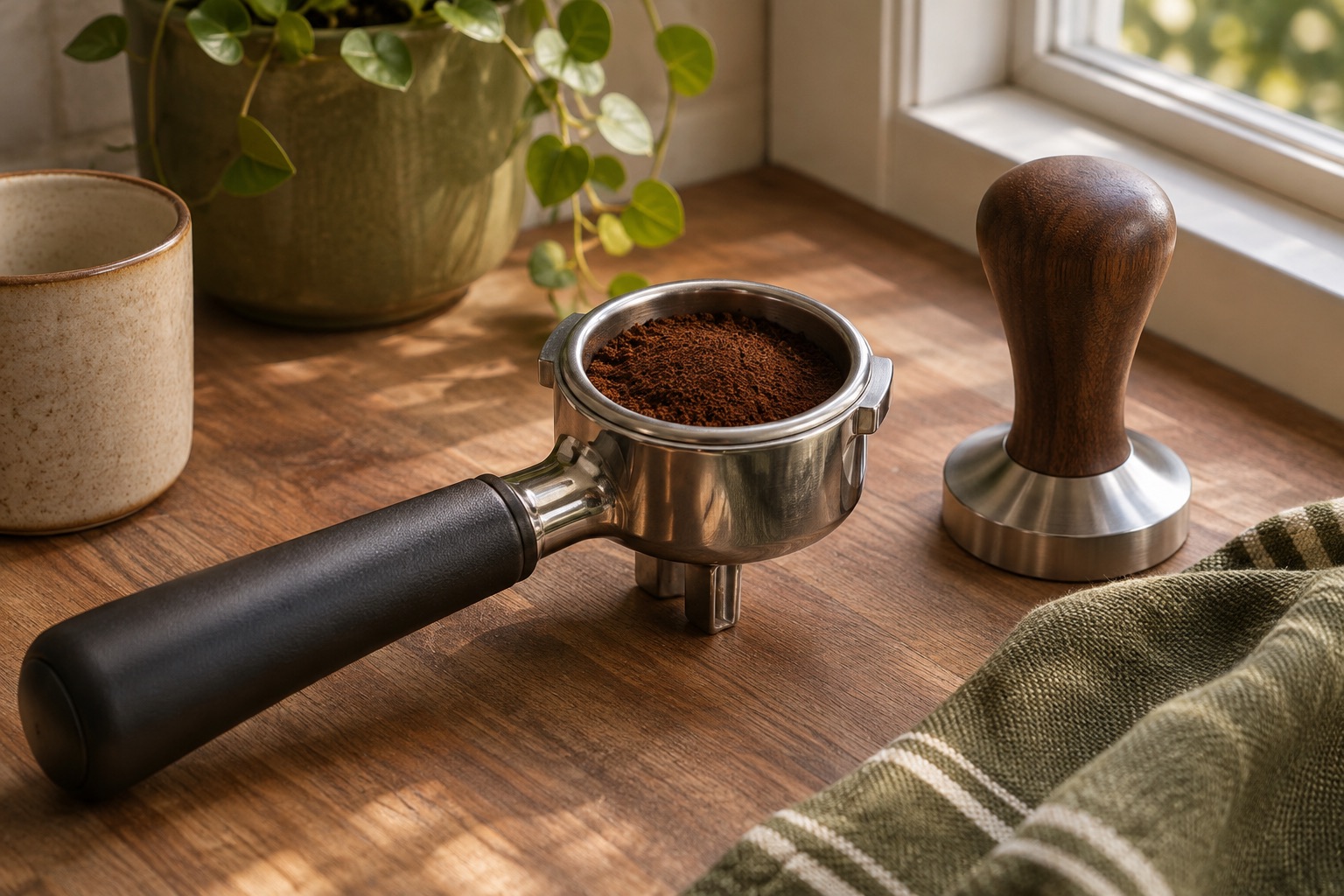
Choose a dose appropriate to your basket, then weigh the coffee going in. As a starting example, 18 g of ground coffee and about 36 g in the cup is a 1:2 ratio. It is a reference for learning, not a rule that every basket or coffee must follow.
Watch the output
Use a scale that fits the tray and cup. Record the dose, beverage weight, approximate time and your impression. If the machine starts a pre-infusion stage, decide consistently when you start timing; different machines and guides may count time differently.
Change one variable
If flow is much too fast, try a finer grind; if it is very slow or chokes, try coarser. Keep the dose and target yield reasonably consistent while making that change. Taste matters more than hitting a magic number, and small adjustments can require another shot.
Write down what worked
Record the grinder setting and coffee used. A fresh bag, a different roast or a basket change may need a new adjustment. Follow your machine’s own instructions for dosing, operation and maintenance.
Find your starting yield.
Espresso ratio compares the weight of coffee going in with the weight of the drink coming out. For example, 1:2 means twice as many grams in the cup as in the basket.
Further reading
Ready to compare equipment?
Explore the directory ↗